Village Sourced · Process Overview
How Chinese Drums Are Made: Village Workshop to Export
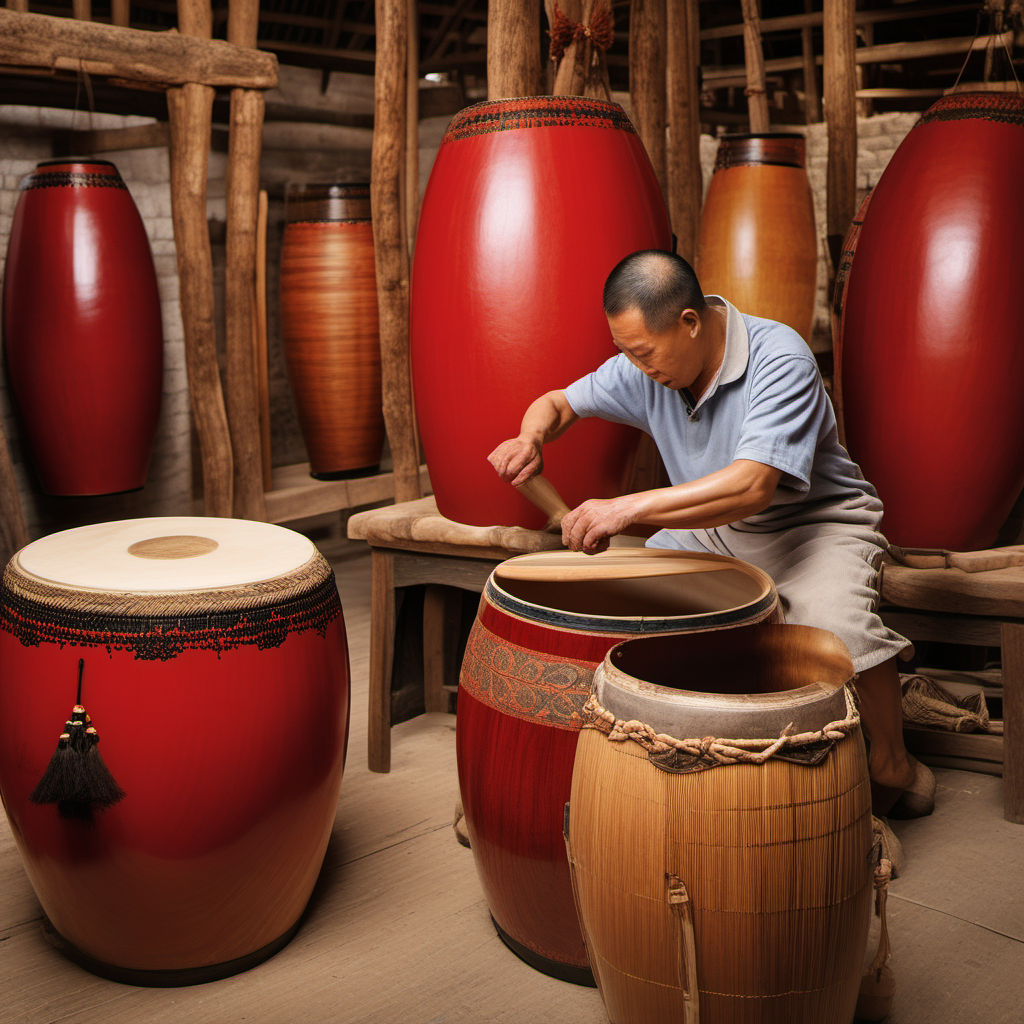
Typical steps include forming the shell, preparing and mounting the skin, drying and tuning, fitting hardware, then workshop QC before export. Matun Drums is a purchasing agent in Matun Village, Yanshi, Luoyang—we source from partner workshops (Village Sourced). We do not manufacture drums and we do not sell factory-direct from our plant.
Workshop Process
From Shell to Export
Qualitative workshop practice from partner makers we source from—not a patented secret formula and not an official heritage-number claim. Details vary by drum type and workshop.
Shell / timber selection
Partner workshops select timber for the drum’s size and duty (hall, parade, school kit). Buyers should confirm shell wood family / finish preference, diameter and depth measuring method (skin face vs shell OD), and indoor vs outdoor duty. Ask in quote for the current workshop specification—we do not invent exclusive “only we use X wood” marketing.
Shell forming
The shell is formed and finished to the agreed size band. Structural integrity and finish quality are checked before skins go on. Exact joinery and reinforcement methods vary by model and maker.
Skin selection
Skin choice depends on drum type, climate, school policy and the voice you want. Common paths include cowhide / buffalo hide; some buyers request synthetic skins for climate or institutional rules. Describe preferences honestly—without graphic sensationalism.
Skin mounting & tension
Mounting and tensioning are skilled workshop steps: even tension matters for a clear, consistent response. Exact tack / rim / rope methods vary by model—confirm on the sample or workshop photo set for your order.
Drying & stabilization
After mounting, drums usually rest / dry so the skin stabilizes before final tuning. Timing depends on skin, humidity and workshop practice—listen to the result rather than worshiping a fake universal clock.
Tuning
Tuning adjusts tension toward the target voice for that size and repertoire. Confirm any matched-set requirements before the purchase order.
Hardware & finish
Hardware (rims, tension parts, stands, straps for waist drums, painted finishes) is chosen for size and duty. Export packing must protect faces and hardware for ocean freight—say if you need cases.
Workshop QC
Before shipment, partner workshops (and our coordinated checks) typically look at shell integrity and finish, skin condition and evenness of tension, hardware completeness and fit, dimensions vs the agreed measuring method, and overall voice notes when relevant.
Export packing
Cartons, moisture protection and case options are agreed for the Incoterm you choose. Partner makers pack; Matun coordinates the export checklist with your forwarder/broker as needed.
Quote → ship coordination
Village Sourced means we match your size/skin notes to a partner workshop, agree QC checks, and pack for export—without claiming we own the factory floor. Optional video checks or arranged visits are visits to partner makers—not “our own factory tour.”
Craftsmanship in Action
Inside the Workshop
Real hands, real tools, real tradition. Follow the drum-making process from raw hide to finished lacquer.
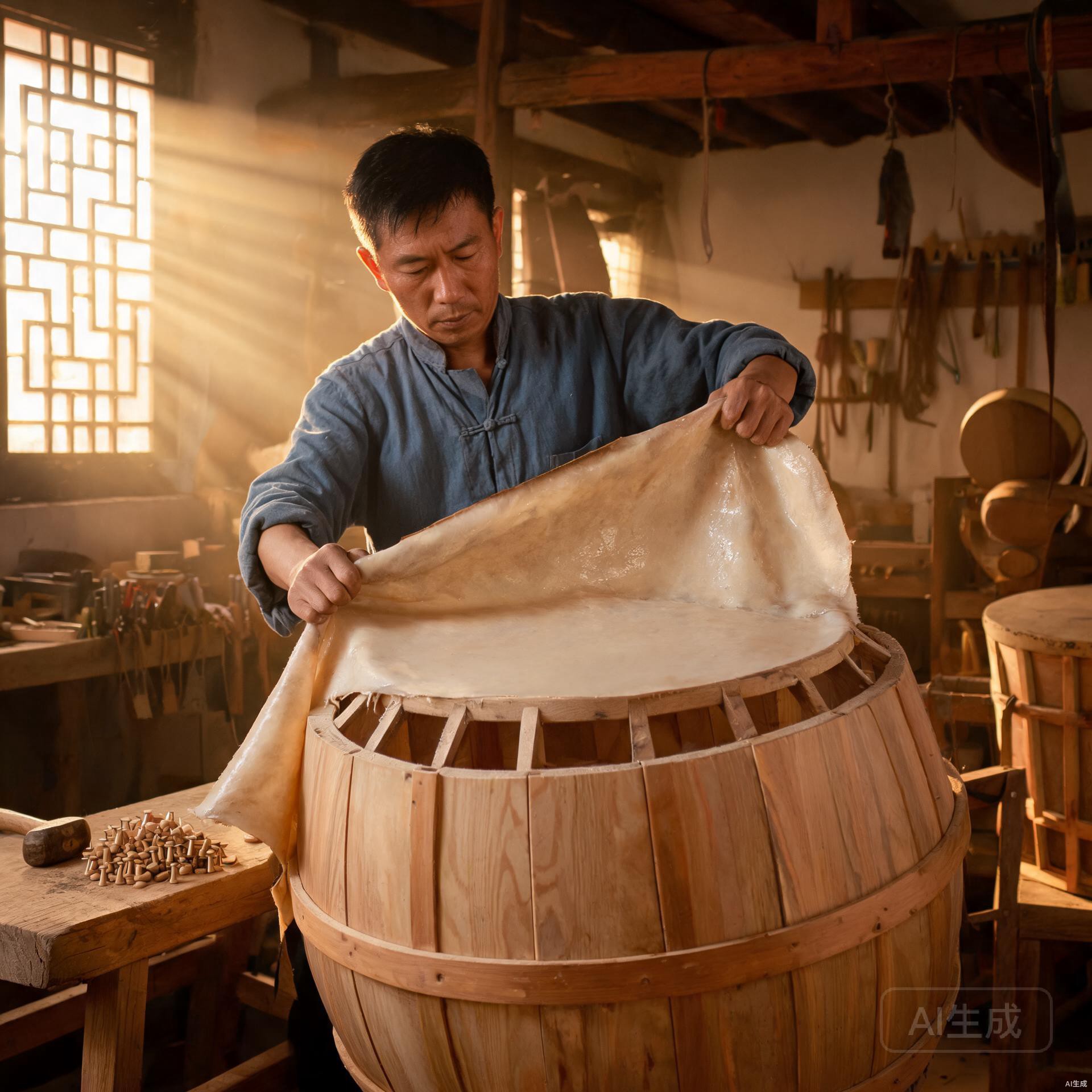
Step 1
Hide Stretching
Cowhide pulled tight over the wooden frame
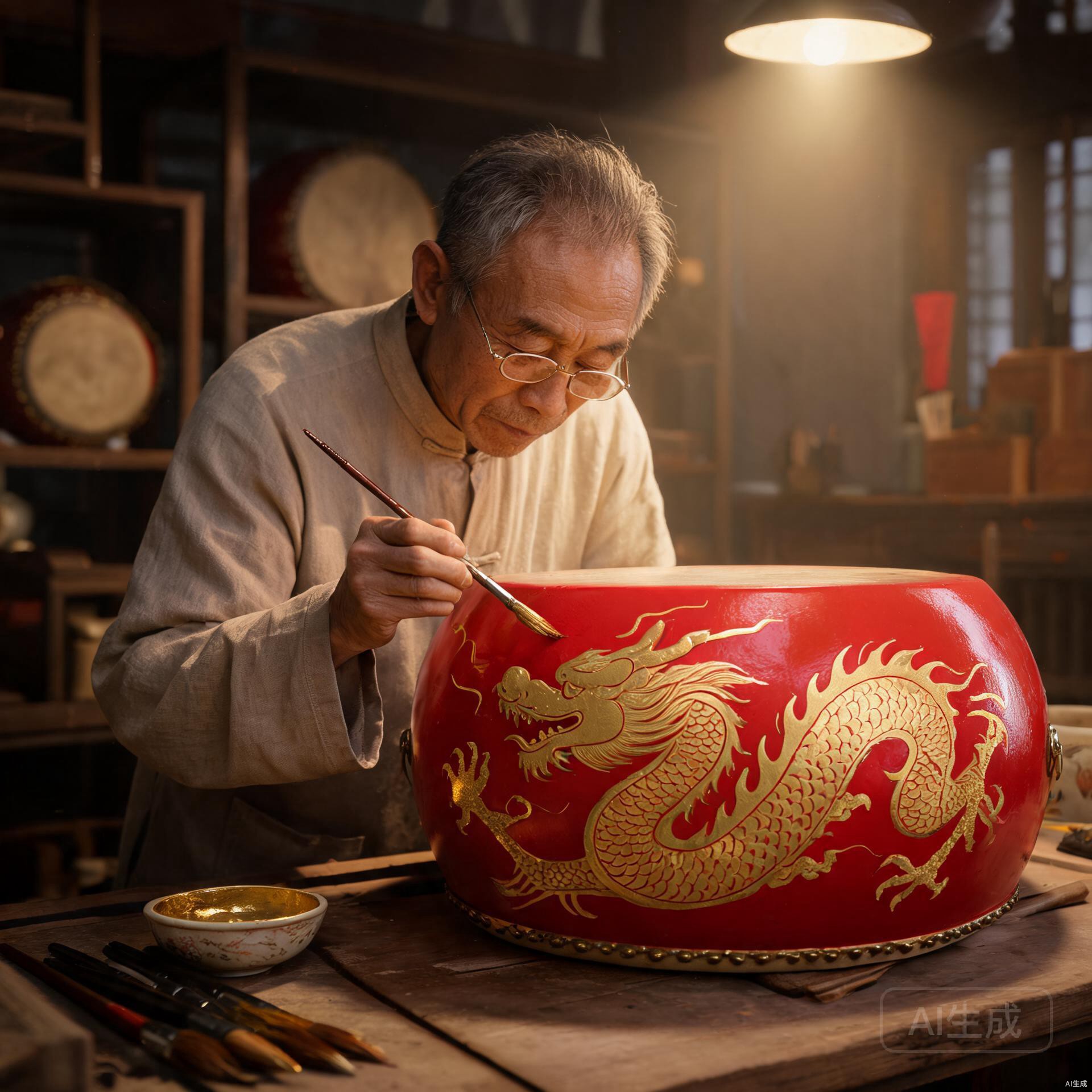
Step 2
Lacquer Painting
Hand-painted gold patterns on red lacquer
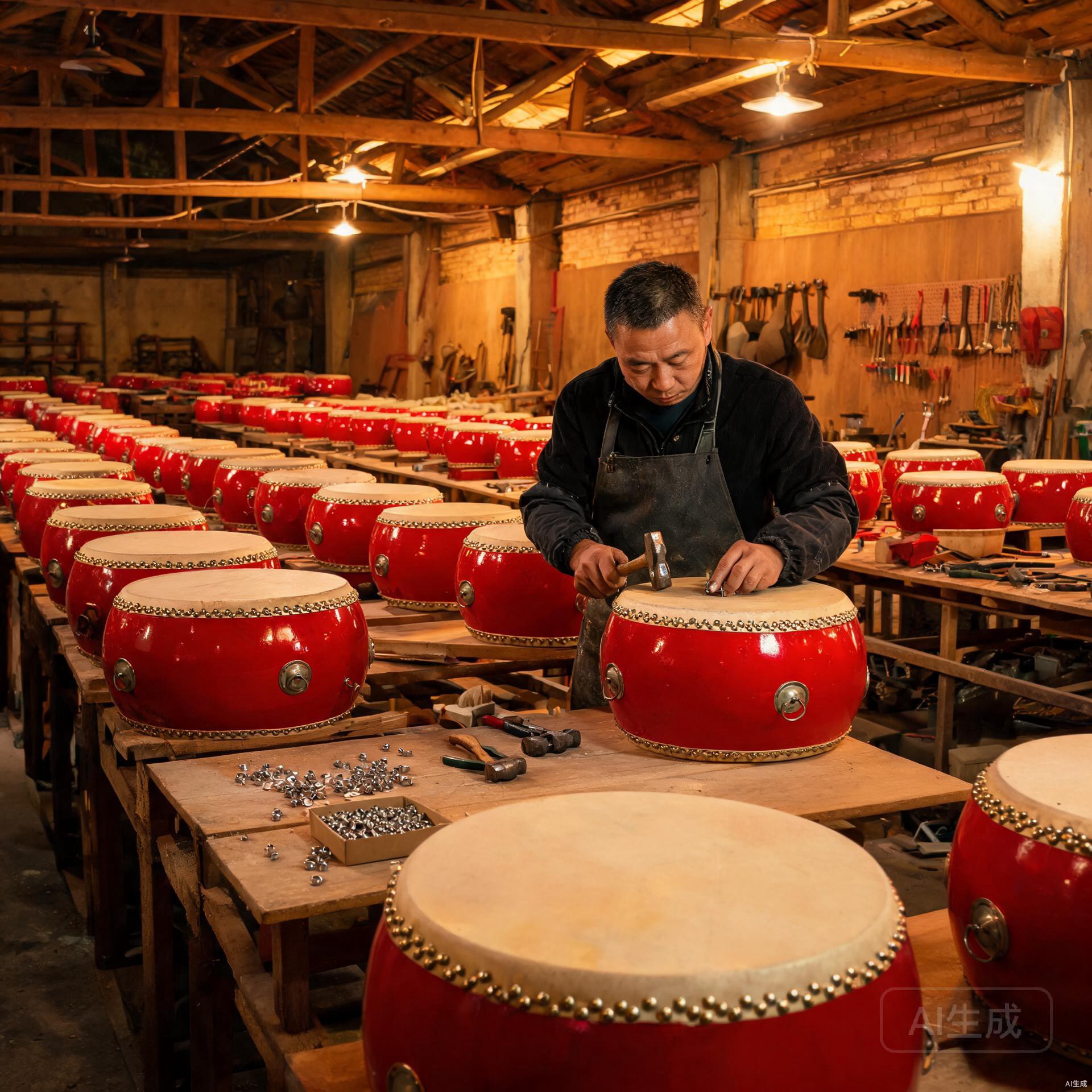
Step 3
Final Assembly
Hardware, studs, and finishing touches
Buying Identity
Village Sourced, Not Factory-Direct
Purchasing agent
Matun Drums coordinates partner village workshops, QC and export. We do not manufacture drums and we do not claim “we build” or “our factory.”
Ask the right workshop questions
Measuring photos, finish sample, skin path, hardware list, packing plan and QC checklist keep quotes comparable across partner workshops.
Trade terms ≠ owning a plant
EXW / FOB / CIF are Incoterms—not proof that Matun owns the workshop. If a quote thread slips into “factory-direct” language, correct it before the PO.
FAQ
Questions buyers ask
How are Chinese drums made?
Typical steps include forming the shell, preparing and mounting the skin, drying/tuning, fitting hardware, then QC before export. Details vary by drum type and workshop practice—ask for the current spec in your quote.
Do you own the factory?
No. Matun Drums sources from village workshops (Village Sourced) and coordinates export—not factory-direct manufacturing. We do not claim “we build” or “our factory.”
What skins are used?
Skin options depend on drum type and workshop practice. Common paths include animal hides; synthetic options exist when climate or policy requires them. Ask in quote for the current specification.
Can I visit or video-check before shipping?
Inspection / video checks can often be coordinated—ask in the quote thread. Visits are to partner workshops, not a claim that we own the plant.
Ready to turn a size band into a shippable order?
Note drum type + diameter × depth (cm) + skin/finish + quantity. Open Get a quote, or WhatsApp +86 18695901333 · WeChat 13213181166. Village Sourced — not factory-direct.