Our Story · Made in Matun
From Matun
to the World
In a small village in Luoyang, generations of craftsmen have built drums by hand. Today, that heritage reaches buyers across Asia, Europe, and the Americas.
The Drum-Making Village
A Village Built on the Sound of Drums
In Luoyang, Henan Province — in the Yanshi District, within the town of Goushi (缑氏镇) — lies Matun Village (马屯). The village is the largest Hui Muslim community in western Henan, with a population of over 3,200 residents. The Hui people's long tradition of raising cattle and sheep provided the raw materials for leatherwork and, ultimately, drum-making.
The drum-making tradition of the Goushi area traces back to the late Eastern Han Dynasty. When the warlord Dong Zhuo brought chaos to the capital Luoyang (c. 189 CE), court drum artisans fled to the nearby Baiguwu area (柏谷坞) of Goushi County, bringing their craft to this region. During the Cao Wei and Western Jin dynasties, both capitals in Luoyang, artisans reportedly made war drums for the general Sima Yi. The provincial-level intangible heritage item "Sima Yi Victory Drum" — a drum melody passed down for over 1,700 years — uses Goushi-made war drums as its primary instrument.
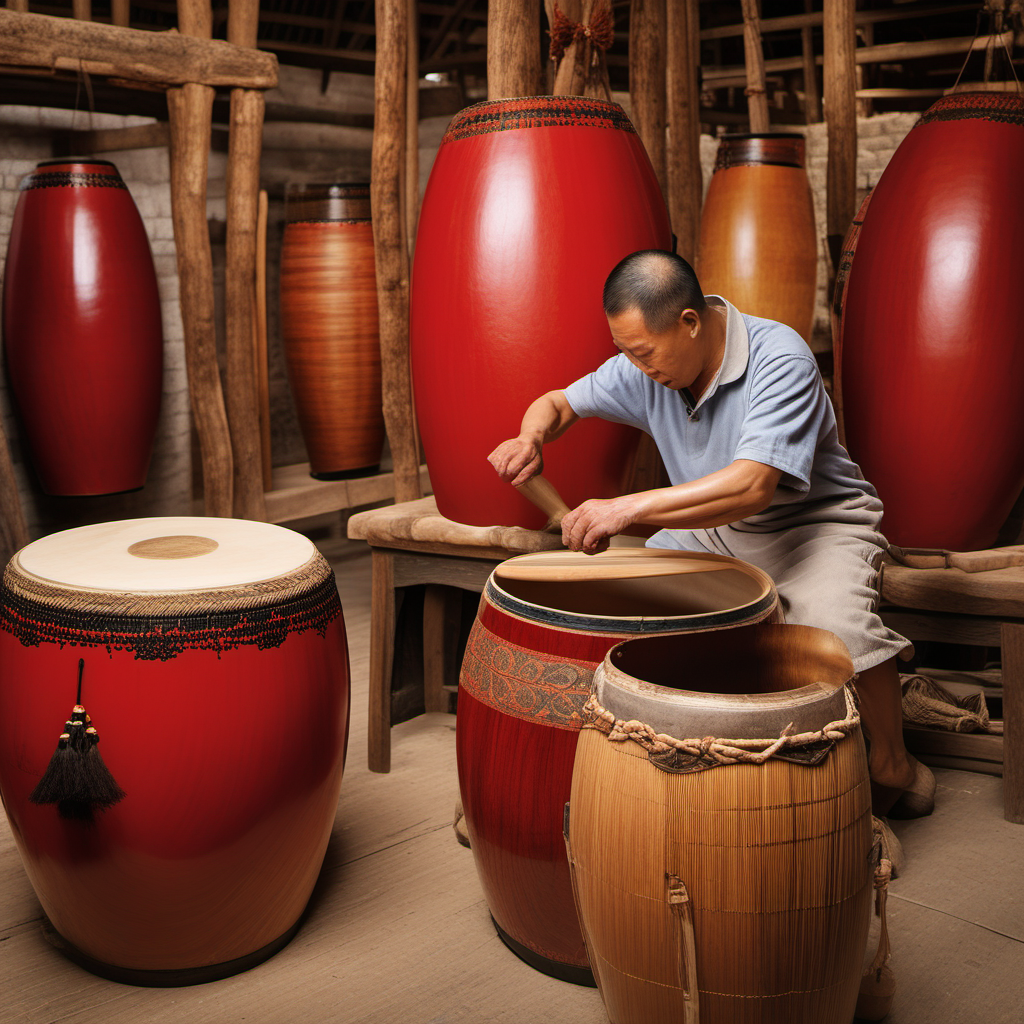
During the Ming and Qing dynasties, Hui families surnamed Ma and Yao migrated to the area, turning their leatherworking skills into a family-based handmade drum industry. The village rhythm was "making drums by day, playing drums by night." In the 1980s, Matun's craftsmen transformed ancestral skills into family-workshop businesses, building a complete production chain from raw timber and cowhide to finished, painted, and packaged drums. In 2018, Matun was officially designated a "China Taobao Village."
Today, Matun is home to over 300 drum-making enterprises and 300+ online shops, with about 80% of residents working in the drum industry. Matun drums have appeared at the 1996 Xi'an Drum Tower Guinness record (3.1-meter drum), the 2006 "World's Largest Drum" (3.48-meter diameter, stored at Nanyue Temple, Hengshan), the 2008 Beijing Olympics opening ceremony (2,008 red drums struck simultaneously), the 2021 Xi'an National Games (1,600+ drums for the opening ceremony), and an NBA court in Portland in December 2024. The village is widely known as 天下制鼓第一村 — “The No.1 Drum-Making Village Under Heaven.”
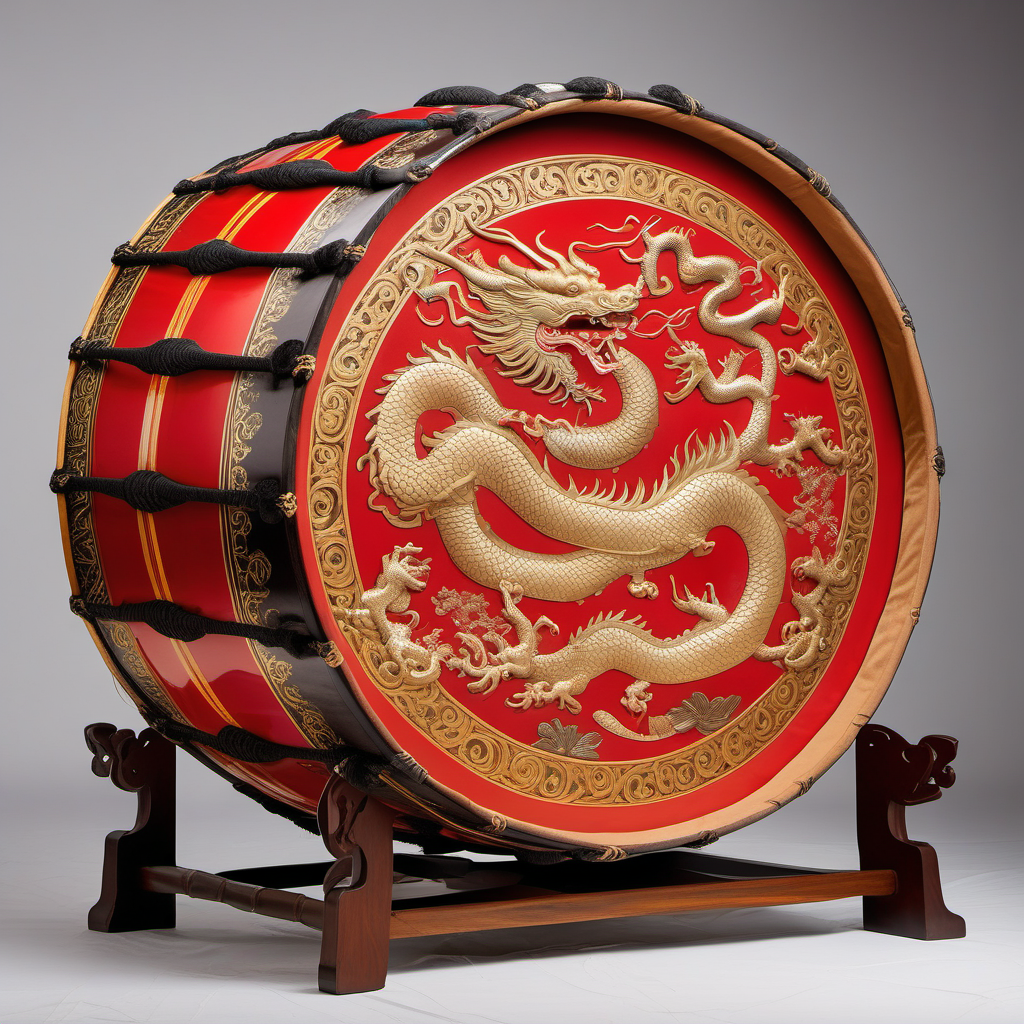
天下制鼓第一村
Matun Village · Luoyang · Henan
Goushi
Yanshi · Luoyang
By the Numbers
An Industry, Not Just a Workshop
Matun is not a single factory. It is an entire village of about 3,000 people organized around drum-making, with the scale and depth to serve global buyers.
~80%
National Market Share
Approximately 70-80% of China's handmade drums and 85-90% of drum skins come from Matun Village.
300+
Drum Enterprises
Over 300 family workshops and companies, plus 300+ online shops. Designated a China Taobao Village in 2018, with online sales exceeding 2 billion RMB.
¥3B
Annual Output Value
Annual drum sales reached nearly 3 billion RMB. The Yanshi District Drum Industry Association was established in 2022 to promote collective development.
2020
ICH Recognition
Goushi Jintun Ma Family Traditional Drum-Making was listed as Luoyang Intangible Cultural Heritage in January 2020. The broader Yanshi area has 118 county-level ICH items.
Hide Preparation
Fresh raw cowhide is selected, soaked in alkali to soften, scraped to remove all fat and flesh, leaving only the outermost skin layer. It is then cut to size and stretched on boards to dry.
Wood Selection & Stave Cutting
Paulownia or toon wood is selected from deep in the Songshan mountains. The wood is sawn into boards, marked, and cut into crescent-shaped staves (月牙板), then air-dried and kiln-dried.
Shell Assembly
Dried staves are assembled on an iron frame piece by piece. Bamboo or wooden dowels join the staves — a distinctive Ma family technique — with cowhide glue between joints. For drums over 3 meters, steel plates reinforce the ring.
Tensioning & Drum-Stepping
The hallmark "踩鼓" technique: soaked rawhide is placed over the shell on a weighted frame. One to two men climb barefoot onto the surface and repeatedly stomp while ropes are tightened and wooden wedges hammered. This cannot be replicated by machines.
Nailing, Tuning & Finishing
The taut skin is secured with steel drum nails — thousands for large drums. The maker performs final tuning (定音), the most skill-critical step. The shell is then sanded, painted with 3+ lacquer layers, and decorated with hand-drawn dragon and phoenix patterns.
The Complete Chain
From Raw Wood to a Drum That Travels the World
Matun's traditional hand-made drum process involves dozens of steps. The main woods used are Chinese toon (椿木) and mountain willow (山柳木), which are bent into arcs and glued together to form the drum shell. Cowhide is cured for months to achieve the right resilience and elasticity before being stretched and nailed onto the shell.
The end-to-end capability means shorter lead times, tighter quality control, and the flexibility to customize at any stage. It is why Matun handles everything from a single custom drum to container-load wholesale orders — and exports to Japan, Korea, France, Russia, and the United States.
Work Directly With the Drum-Making Village
Whether you need a single custom drum or a wholesale order, you are working with a manufacturer rooted in a real drum-making tradition. Tell us what you need.