Our Craftsmanship · 10 Steps
How Our Drums Are Made
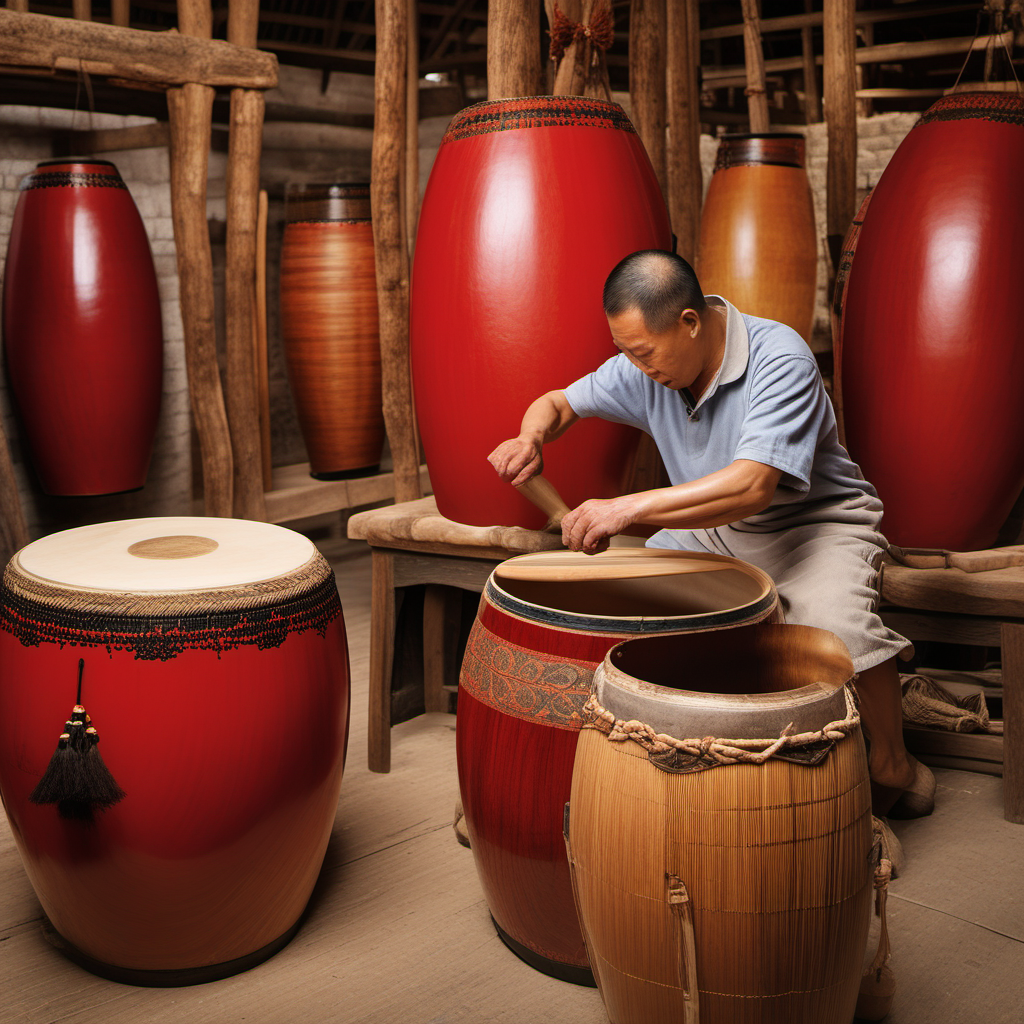
Every Matun drum is handmade by skilled craftsmen using techniques refined over generations. Follow the journey from raw timber to an export-ready instrument.
The Full Process
From Hide to Harmony
The Ma family traditional technique — listed as Luoyang Intangible Cultural Heritage in 2020 — involves 20+ individual procedures. These are the core steps that define Matun drum-making.
Hide Preparation
Fresh, bloody raw cowhide is selected — a green, environmentally friendly choice. It is soaked in alkali to soften, then all fat and flesh is scraped away, leaving only the outermost skin layer. The hide is cut to the drum's required dimensions and stretched on wooden boards to dry.
Timber Selection
Paulownia or toon wood is selected — the best materials come from deep in the Songshan mountains. The wood is sawn into boards, then marked and cut into curved crescent-shaped staves (月牙板). The staves are thoroughly air-dried and kiln-dried to prevent warping.
Shell Assembly
Dried staves are assembled on an iron frame, piece by piece. Bamboo or wooden dowels join the staves — a distinctive Ma family technique, unlike metal fasteners used elsewhere. Cowhide glue is applied between joints. For drums over 3 meters, steel plates reinforce the ring internally.
Sanding & Reinforcement
The assembled shell is sanded smooth. Gauze cloth is wrapped over the body, then glue is applied to reinforce the joints. The shell is inspected for structural integrity before the critical tensioning step.
Drum-Stepping (踩鼓)
The hallmark of Matun craftsmanship. The shell with soaked, softened rawhide is placed on a weighted frame — two millstones and a wooden disc on top. One to two strong men climb barefoot onto the drum surface and repeatedly stomp while ropes are tightened and wooden wedges hammered. This human-feel tension cannot be replicated by machines.
Nailing
Once the skin is stretched taut, it is secured with dense steel drum nails around the rim. For the 3.48-meter "World's Largest Drum," over 6,000 nails were used. The nailing pattern ensures permanent, uniform tension for years of playing.
Tuning (定音)
The most skill-critical step. The maker determines the drum's sound quality through careful adjustment and repeated striking. As craftsman Ma Xianfeng says: "Whether the drum is durable and sounds good depends entirely on the tuner's skill." This is where master craftsmanship is most evident.
Lacquering
The shell receives at least three layers of paint and lacquer for protection and visual depth. Traditional red lacquer is the most common finish, with each layer allowed to cure before the next is applied.
Hand-Painted Decoration
Master painters hand-draw traditional patterns — dragons, phoenixes, auspicious clouds, and lotus flowers — using techniques passed down through generations. Each pattern carries cultural significance, from imperial dragons for ceremonial drums to cloud motifs for temple use.
Hardware & Export
Drum rings, carrying straps, tassels, and stands are fitted. Each drum is test-played and inspected for sound, structure, and finish. Approved drums are packed and shipped worldwide — to Japan, Korea, France, Russia, the United States, and beyond.
Craftsmanship in Action
Inside the Workshop
Real hands, real tools, real tradition. Follow the drum-making process from raw hide to finished lacquer.
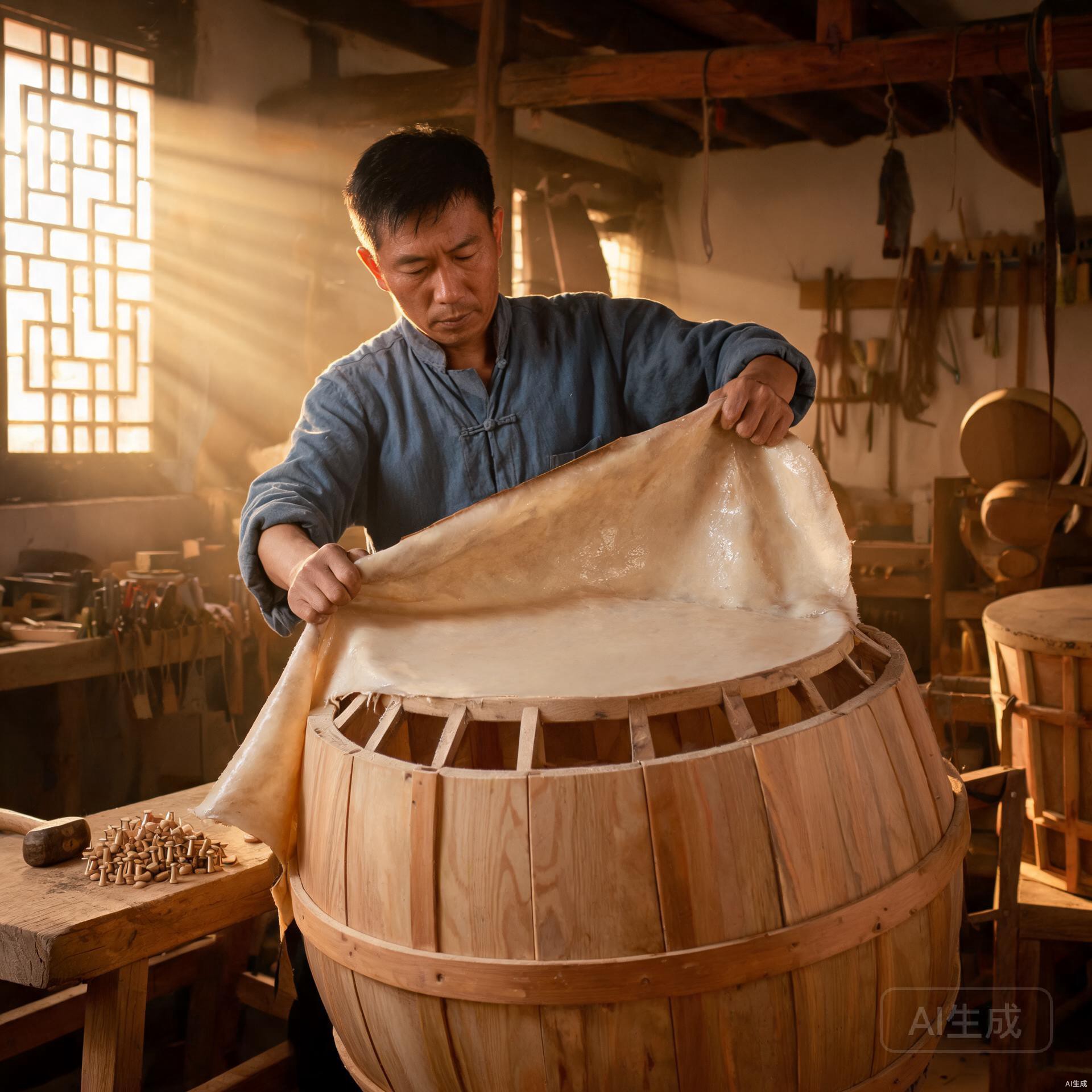
Step 1
Hide Stretching
Cowhide pulled tight over the wooden frame
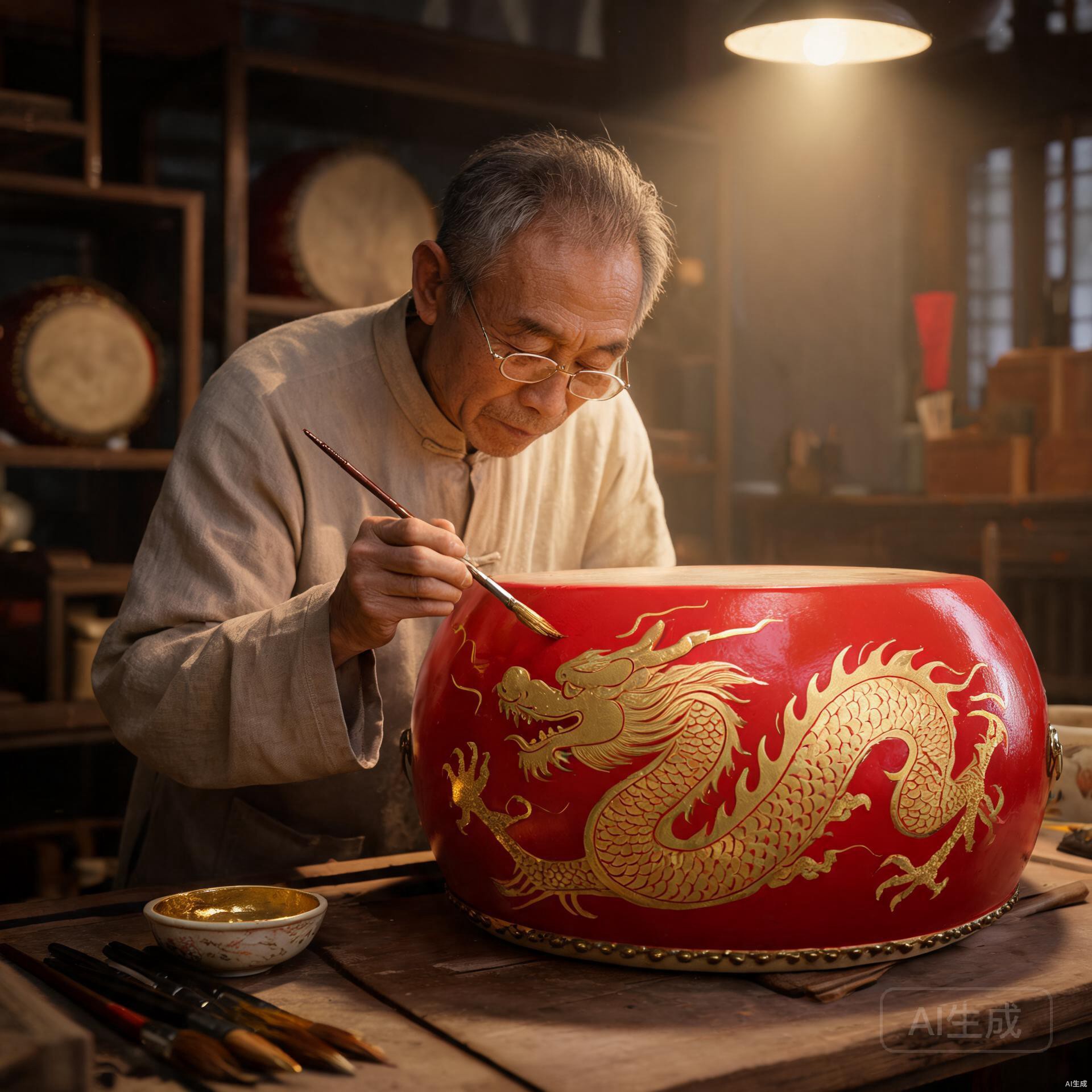
Step 2
Lacquer Painting
Hand-painted gold patterns on red lacquer
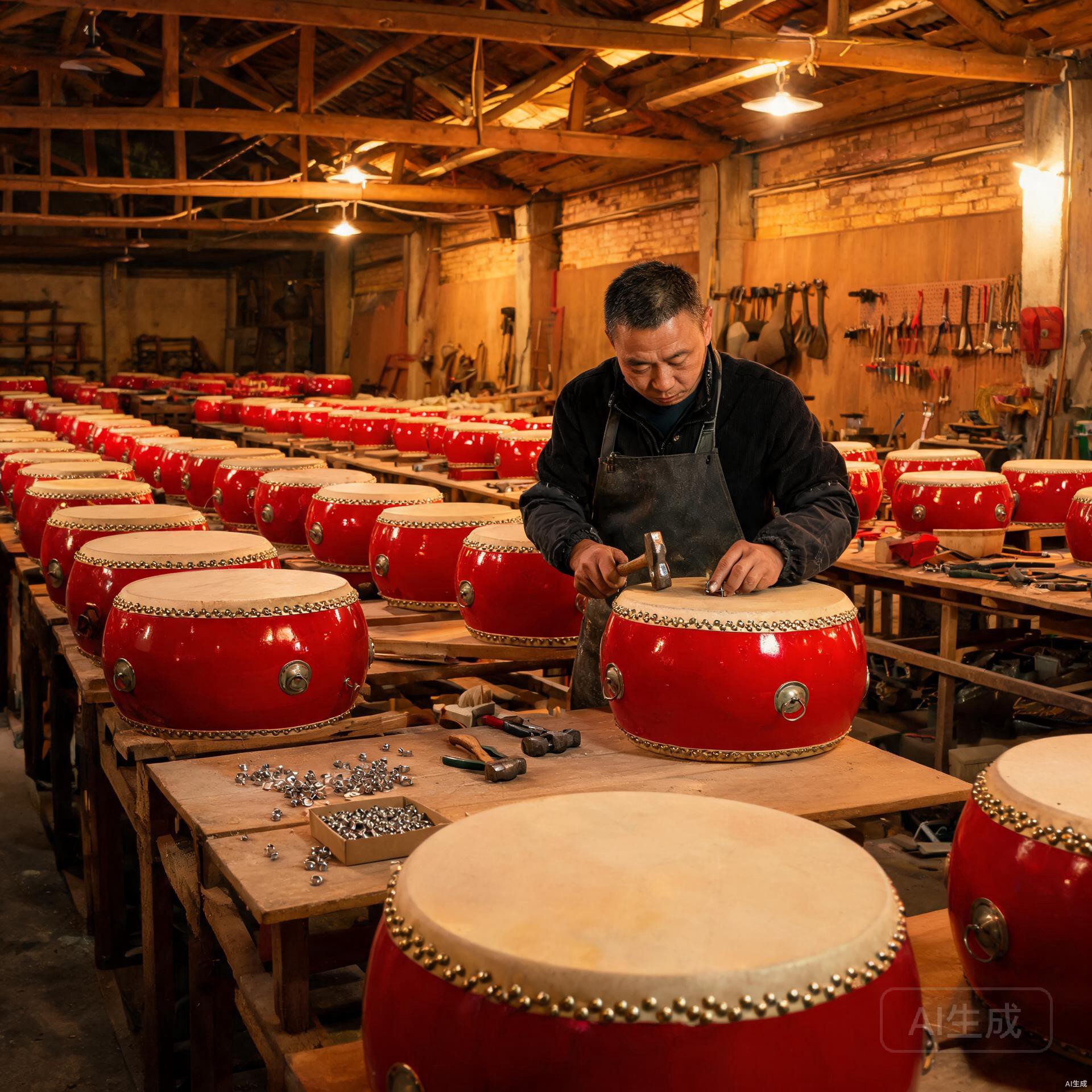
Step 3
Final Assembly
Hardware, studs, and finishing touches
What Sets Us Apart
Craftsmanship, Not Mass Production
Handmade from Start to Finish
No two drums are identical. Every shell is shaped, every drumhead stretched, and every surface painted by a craftsman — not a machine.
Traditional Techniques
Soaking, stretching, nailing, and tuning by ear — the same methods passed down through generations of drum-makers in Matun Village.
Strict Quality Standards
Each drum is test-played and inspected for sound, structure, and finish. A drum only ships when it meets our standards — and yours.
Want Drums Made to Your Spec?
Custom sizes, colors, drumheads, hardware, logos, and packaging. Tell us what you need and our craftsmen will build it.