Drum History
The Story of the Drum
From Neolithic ritual pits to modern stages, the drum is humanity's oldest instrument. Explore 7,000 years of rhythm across every culture — with a special focus on China's unparalleled drum heritage.
Bronze Age
Ancient Bronze Drums
Sacred Sound
Temple Ceremony
Living Tradition
Festival Parade
China's Drum Heritage
7,000 Years of Chinese Drums
China is one of the world's oldest drum cultures. From the crocodile-skin drums of the Taosi site (c. 2300 BCE) to the massive "King of Drums" in Beijing's Drum Tower, drums have shaped warfare, ritual, governance, and folk life for millennia.
c. 5000 – 2000 BCE
Neolithic Origins
China is one of the earliest regions where drums appeared. Archaeological discoveries reveal a sophisticated ritual instrument culture thousands of years before the written word.
- Taosi site (c. 2300–1900 BCE) in Shanxi yielded crocodile-skin wooden drums (tuogu 鼍鼓), clay drums, and stone chimes — the earliest known ritual percussion ensemble
- The Taosi Site Museum officially opened on November 12, 2024, allowing visitors to see these ancient instruments firsthand
- Majiayao culture red pottery drum (c. 5000 years ago) in the Shanghai Museum collection is among China's earliest surviving pottery drums
- The Classic of Poetry (诗经·大雅·灵台) contains the phrase "鼍鼓逢逢" (the tuogu rumbles) — the earliest textual reference to drums in Chinese literature
- Legend traces "earth drums" (土鼓) to the era of Emperor Yiqi, as recorded in the Book of Rites (礼记·明堂位)
- The development path: pottery drums → clay drums → skin drums → bronze drums, eventually diversifying into hundreds of traditional types
c. 1600 – 256 BCE
Shang & Zhou Dynasties
Drums became deeply embedded in state ritual, military command, and social hierarchy. The Zhou Dynasty formalized drum management with dedicated officials.
- Anyang Yin Ruins (Shang Dynasty) yielded crocodile-skin drums and wooden-frame hide drums, showing mature drum-making by c. 1300 BCE
- The Zhou Dynasty established the office of "Guren" (鼓人, Drum Master) to manage drum music and ritual — drumming was now a state institution
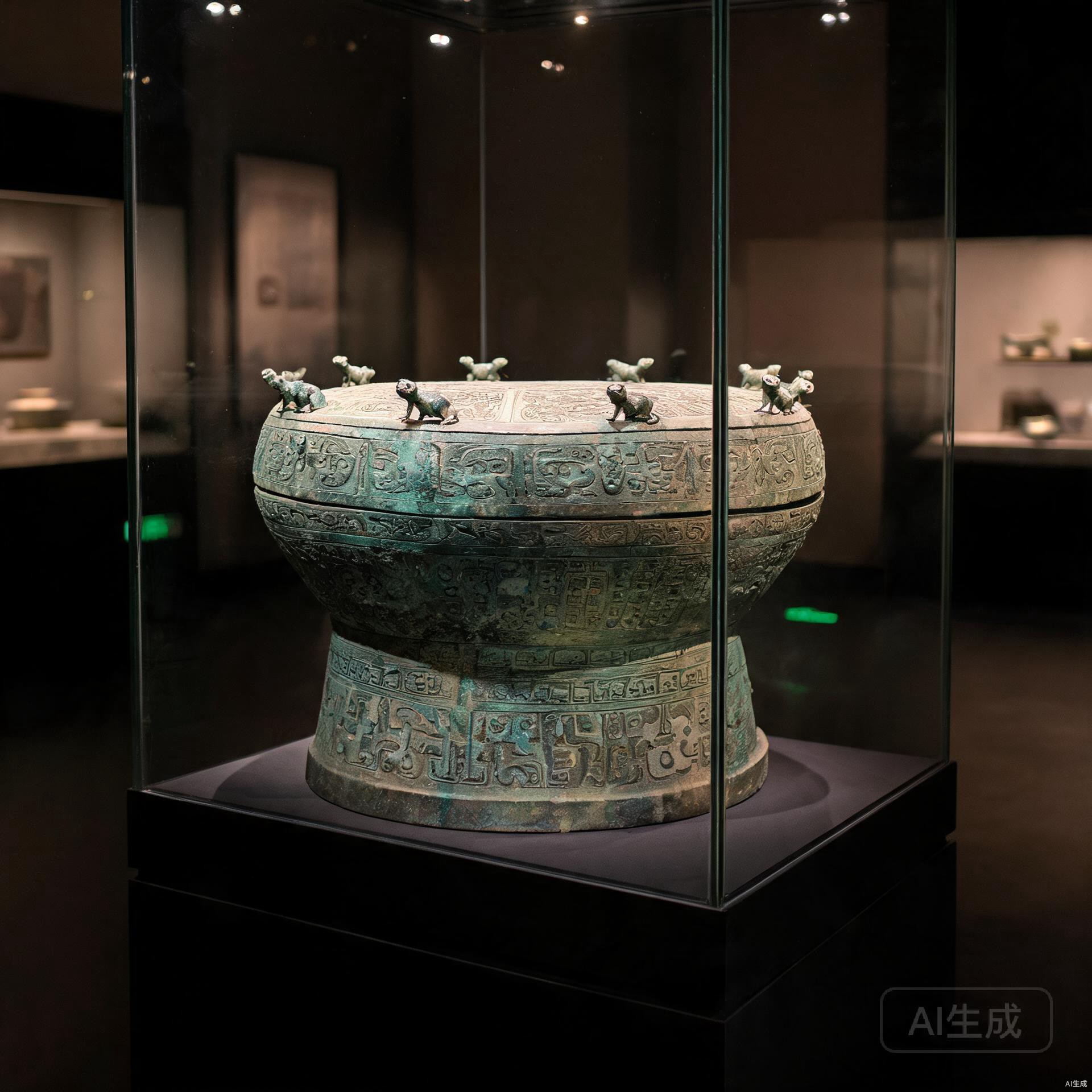
- The Chongyang Bronze Drum (崇阳铜鼓), discovered in 1977 in Hubei, is the only surviving Shang Dynasty animal-mask bronze drum — cast in three parts imitating wooden skin drums, over 3,000 years old
- In 1975, five primitive bronze drums were unearthed at Wanjiaba (万家坝) in Yunnan — with soot marks suggesting bronze drums evolved from inverted cooking cauldrons. Over 1,500 bronze drums have been excavated in China
- The Zhou Rites (周礼) documented specific drum types: 雷鼓 for deity sacrifices, 灵鼓 for ancestral worship, 路鼓 for rites, and 建鼓 mounted on a vertical pole
- Drums symbolized authority and cosmic order — used in state sacrifices, military campaigns, and court ceremonies
202 BCE – 220 CE
Han Dynasty
Drum usage expanded into court entertainment, folk celebrations, and Buddhist and Daoist temple rituals. Drums became a bridge between elite and popular culture.
- The Mawangdui Han Tomb "Drumming Picture" silk painting shows soldiers drumming with tiger-patterned drumheads — evidence of drums in Han visual culture
- Drums took on more ceremonial, banquet, and military signaling functions in the imperial court
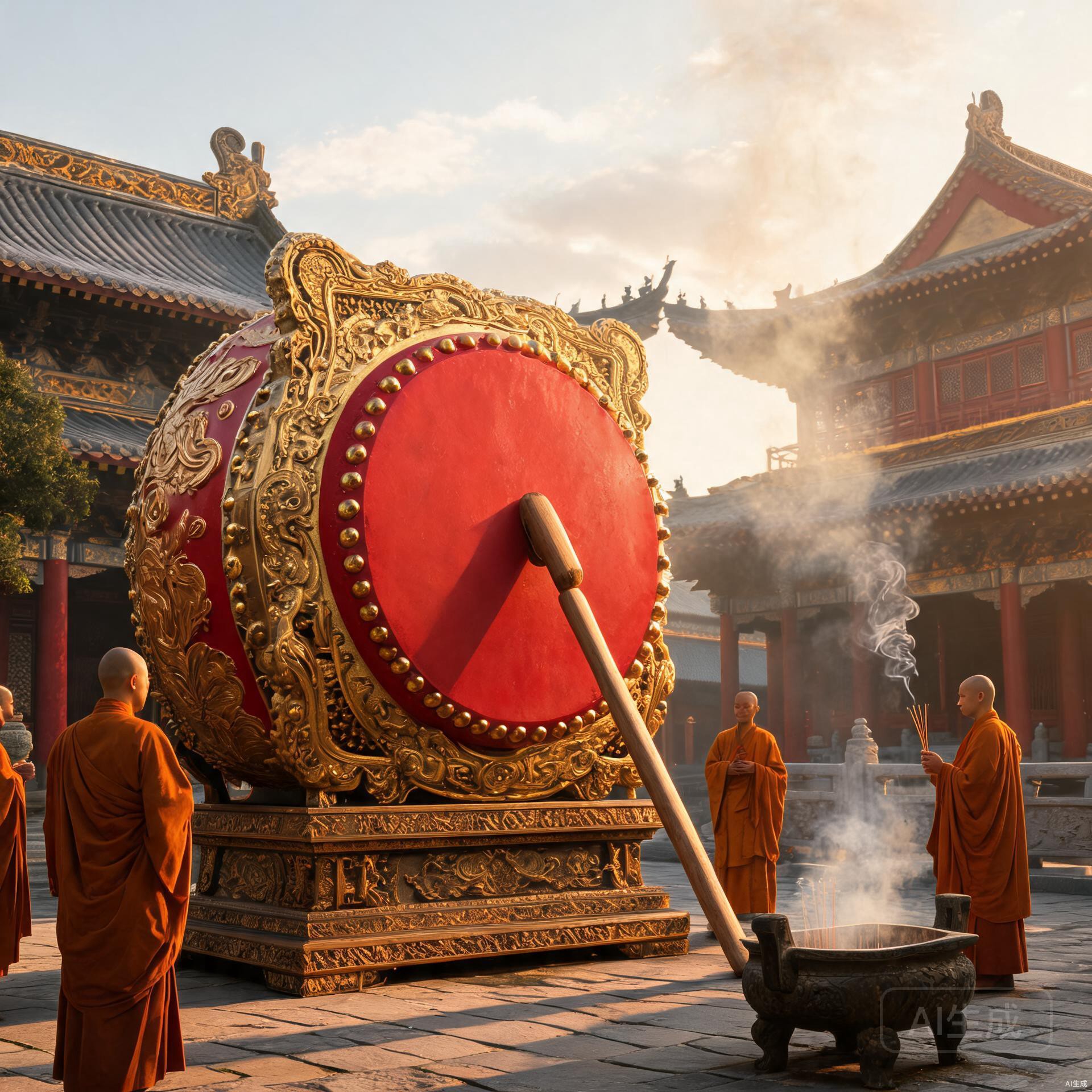
- Buddhist temples adopted large drums for morning and evening rituals — the White Horse Temple drum measures 128 cm diameter × 130 cm height
- At the end of the Eastern Han (c. 189 CE), court drum artisans fled Luoyang during Dong Zhuo's rebellion to the Baiguwu (柏谷坞) area of Goushi County — planting the seeds of China's drum-making capital, Matun Village
- During the Cao Wei dynasty (220-265 CE), Goushi artisans reportedly made war drums for the general Sima Yi. The "Sima Yi Victory Drum" (司马懿得胜鼓), a provincial intangible cultural heritage melody passed down for over 1,700 years, uses Goushi-made war drums
618 – 1279 CE
Tang & Song Dynasties
Drum culture flourished across every level of society. Court music, opera, storytelling, folk festivals, and dragon boat racing all featured drums as essential instruments.
- Tang court drum music reached its zenith — large-scale palace performances and dance routines featured drums as the core percussion instrument
- The Tang Dynasty encyclopedia Tongdian (通典) documented the waist drum's "wide-headed, narrow-waisted" shape, noting both ceramic and wooden versions
- Tang court music spread to Japan via diplomatic envoys (遣唐使), influencing the development of Japanese taiko traditions
- Song Dynasty court banquet music (教坊大乐) was the grandest ensemble form — using 200 Jie drums (羯鼓), 2 large drums, and 2 Jie drum stands
- By the Song Dynasty, drums were ubiquitous in folk life — used in regional opera, storytelling, dragon boat racing, and festive gatherings
1368 – 1912
Ming & Qing Dynasties
Drum culture deepened its roots in regional folk traditions. Local drum genres proliferated, each with distinct performance styles and community functions.
- The Beijing Drum Tower's massive "Guardian Drum" (戒晨鼓) served as the city's public timekeeper — its drumhead measured about 1.5 meters in diameter, earning it the title "King of Drums"
- The public timekeeping system persisted until 1915, when clocks made the drum tower obsolete
- The Qing Dynasty imperial guard band (卤簿乐) used 48 large drums, 4 Zhang drums, 4 clappers, 12 dragon-head flutes, 4 gongs, and 24 painted horns
- Peking Opera (京剧) emerged and matured — the Bangu (板鼓, clapper drum) was developed as the conductor's instrument, the lead percussionist (鼓师) controlling the entire opera through codified rhythm patterns (锣鼓经)
- Regional drum traditions blossomed: Ansai waist drums (Shaanxi), Weifeng luogu (Shanxi), Taiping drums (Beijing), Fengyang flower drums (Anhui), and Kaifeng pan drums (Henan)
- Folk drum genres became intertwined with local identity, agricultural cycles, and religious festivals
Ancient Drum Types
Drums and Their Uses in Ancient China
Every drum had a purpose — from commanding armies to accompanying storytellers. These four categories shaped Chinese drum culture for thousands of years.
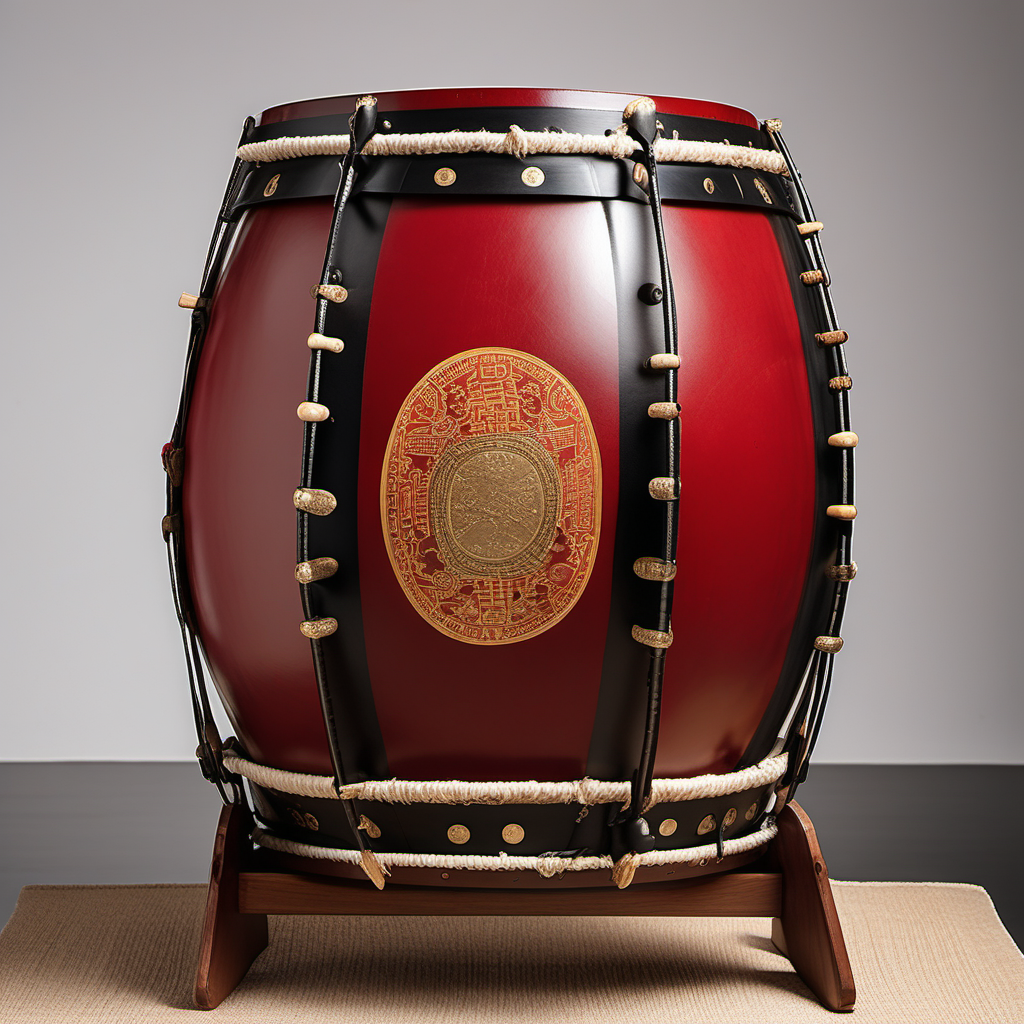
Military Signal & Command
War Drums (战鼓)
Ancient armies followed the principle "advance at the drum, retreat at the gong." Drums commanded attacks, formations, and retreats — their deep, far-carrying sound could unify massive armies. The Qin-Han War Drums of Shaanxi survive today as a folk tradition with formations named after the Eight Trigrams, Three Stars, and Seven Stars.
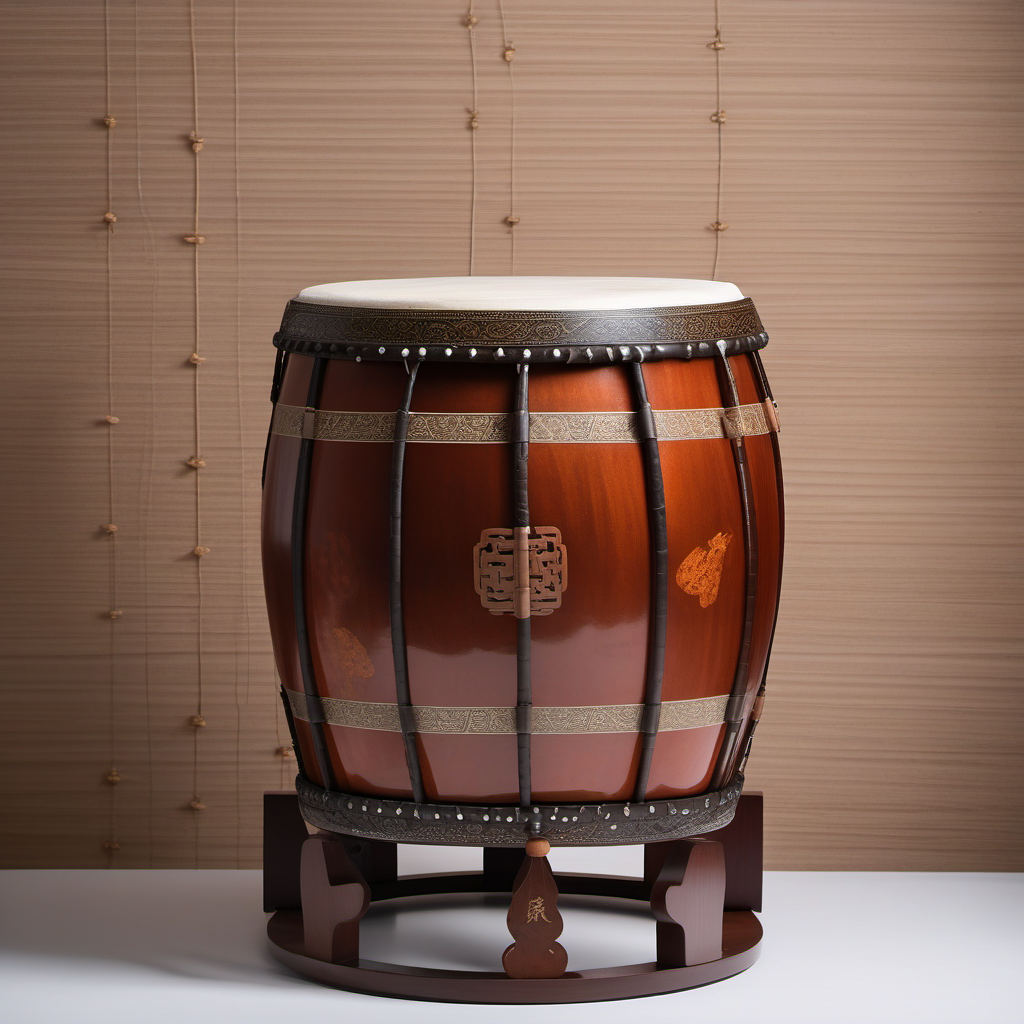
Ritual & Ceremony
Tanggu / Court Drums (堂鼓)
The Tanggu traces its lineage to the crocodile-skin drums of the Taosi site (c. 2300 BCE). By the Shang Dynasty, court drums were central to state ritual. Temple drums — like the White Horse Temple's 128 cm diameter drum — were struck for morning and evening prayers, marking sacred time.
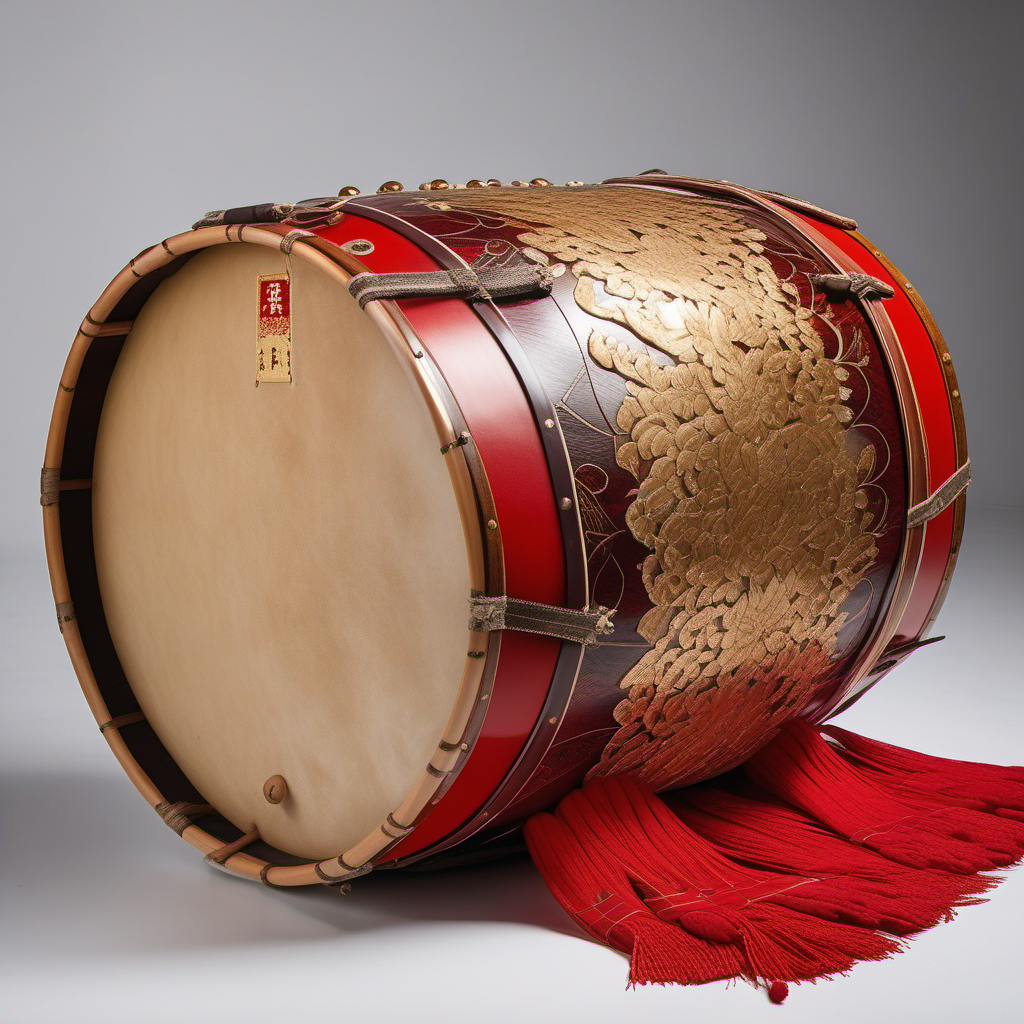
Festivals & Performance
Folk Performance Drums
The waist drum, said to have evolved from the foreign jie drum during the Northern and Southern Dynasties, became the heartbeat of folk dance. Ansai waist drums of Shaanxi embody the wild spirit of the Loess Plateau, while southern styles — Fengyang, Yulan, and Di flower drums — are smaller, more lyrical, and narrative-driven.
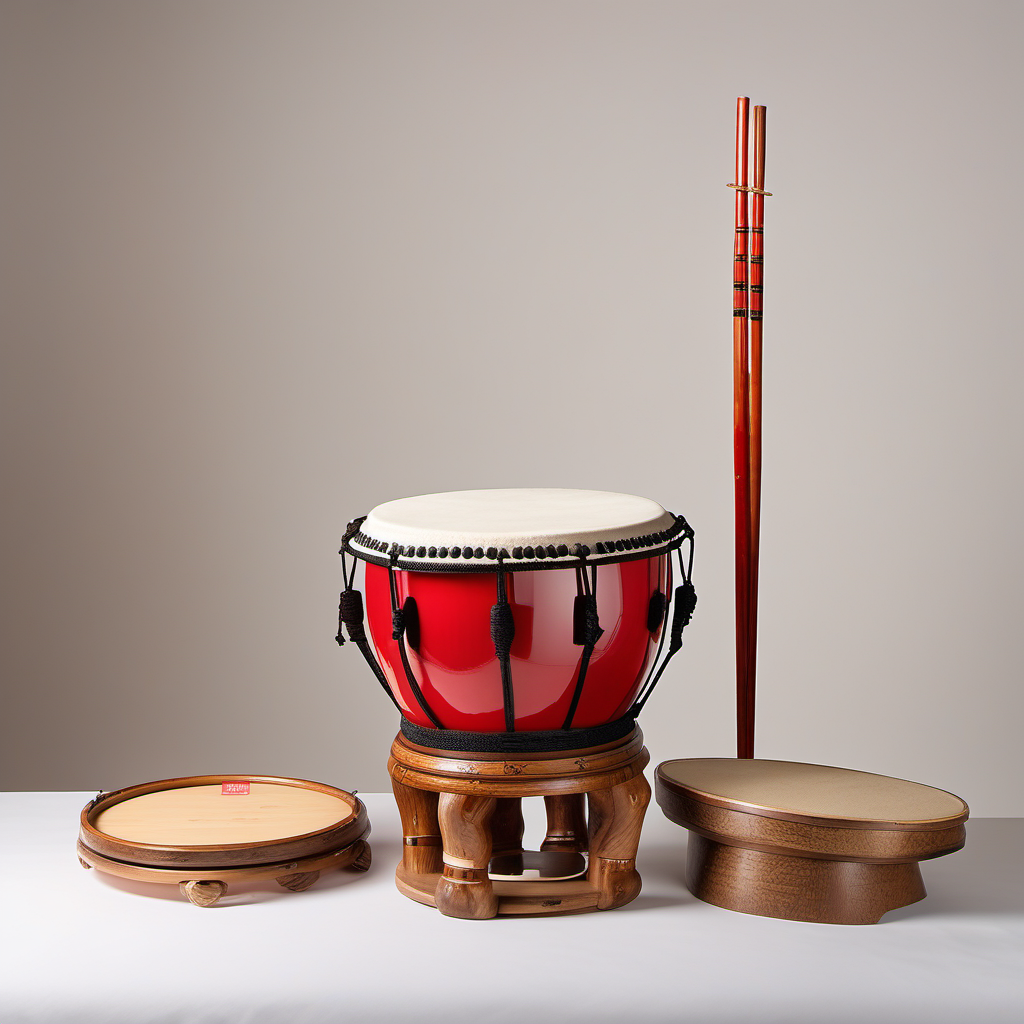
Narrative Arts
Storytelling Drums (书鼓)
The flat, round storytelling drum is the soul of "dashu" (大鼓书) — northern China's oral tradition. Performers hold book boards in the left hand and a single bamboo mallet in the right, creating a one-person theater. Jingyun, Xihe, and Plum Blossom drum songs all rely on this unassuming instrument.
Cultural Meaning
Why Drums Mattered
In ancient China, drums were never just instruments. They were the voice of authority, the bridge to the divine, the heartbeat of festivals, and the symbol of cosmic order.
Warfare & Military Signal
- "Advance at the drum, retreat at the gong" — the fundamental rule of ancient Chinese warfare
- Drum sounds carried far and penetrated battlefield noise, making them ideal for mass communication
- Drums boosted morale and psychologically intimidated enemy forces
- The Qin-Han War Drums tradition includes over 20 formation patterns still performed today
Religion & Temple Ritual
- The Taosi ritual ensemble — crocodile drums, clay drums, stone chimes, and bronze bells — represents the "sacred sound" tradition
- In ancient belief, drums were generated by thunder and thunder was reproduced through drums — the complementary relationship (鼓由雷兴) linked the human world with the divine
- Drum sounds resemble thunder, linking them to rainmaking, divine communication, and the awakening of nature
- Buddhist temples used drums for morning and evening prayers and major ceremonies
- The "Dengwen Drum" before government offices let citizens sound grievances directly to authority
Festivals & Folk Performance
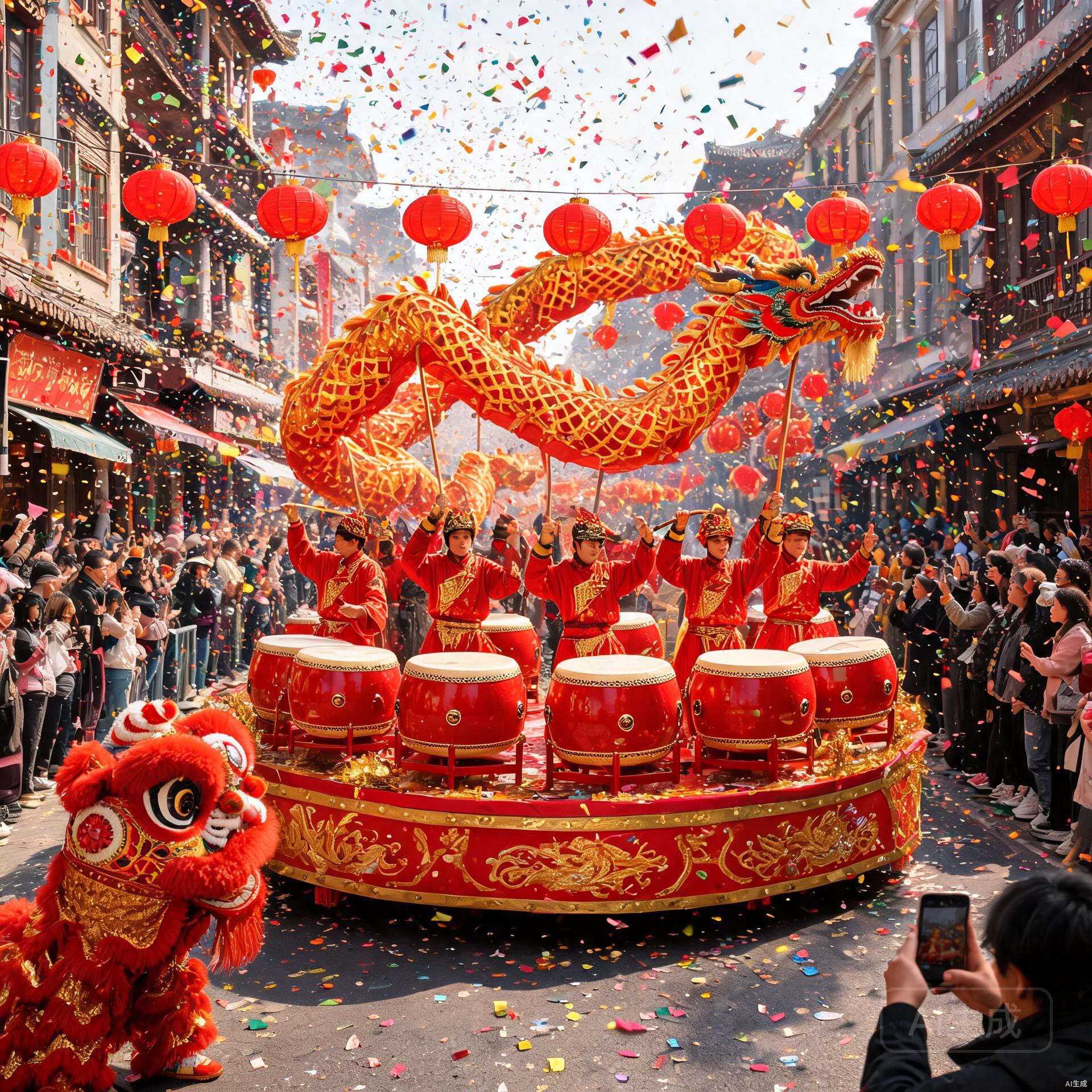
- Spring Festival, Lantern Festival, and dragon boat races all feature drums as the rhythmic heart
- Drums are believed to drive away evil spirits (驱邪) and summon good fortune (纳福) — during Chinese New Year, drums help drive away the Nian beast
- Lion and dragon dance performances depend on drums to drive the dramatic narrative
- The Lion Dance traces to the "elephant performers" documented in the Book of Han
- Southern lion dance emphasizes martial prowess; northern style focuses on group coordination
Power & Authority
- In Chinese philosophy, the drum represents the voice of heaven and earth (天地之声) — its deep resonance associated with thunder and the power of the dragon
- Drums symbolized authority — palace halls featured bells and drums to represent cosmic order
- Government offices placed "Dengwen Drums" outside for citizens to appeal injustice
- The Beijing Drum Tower's 1.5-meter "King of Drums" was the voice of imperial timekeeping until 1915
- In Chinese opera, the percussion section (武场) is the rhythmic backbone — the lead percussionist (鼓师) serves as the conductor through codified rhythm patterns (锣鼓经)
Regional Traditions
Drums Across China
China's vast geography produced distinct drum traditions — each reflecting local climate, livelihood, and cultural memory.
Northern China
- Ansai Waist Drums (Shaanxi)
- Weifeng Luogu (Shanxi)
- Taiping Drums (Beijing/Lanzhou)
- Kaifeng Pan Drums (Henan)
- Jinnan Flower Drums (Shanxi)
Bold, powerful, and expansive — northern drum traditions reflect the vastness of the Yellow River plateau and the martial spirit of the frontier.
Southern China
- Fengyang Flower Drums (Anhui)
- Yulan Flower Drums (Jiangsu)
- Di Flower Drums (Hunan)
- Nanjing Baiju (Jiangsu)
- Zhuang Hui Drums (Guangxi)
Small, diverse, and lyrical — southern drum styles are often narrative-driven, connected to folk tales, agricultural cycles, and water-based livelihoods.
Southwest & Frontier
- Bronze Drums (Yunnan/Guangxi)
- Mang Gu Dance (Yunnan)
- Water Drum Dance (Yunnan)
- Bayin Luogu (Guangdong)
Bronze drums — flat, curved, hollow-bottomed — were cast until the late Qing Dynasty. These drums carry the spiritual weight of southwestern minority cultures.
Living Heritage
Drums & Intangible Cultural Heritage
China has designated dozens of drum traditions as National Intangible Cultural Heritage, ensuring these ancient rhythms survive for future generations.
| Tradition | Region | Type | Recognition |
|---|---|---|---|
| Jiangzhou Drum Music | Shanxi, Xinjiang County | Drum Music | 2006 (1st Batch National ICH) |
| Ansai Waist Drums | Shaanxi | Drum Dance | National ICH |
| Taiping Drums | Beijing/Lanzhou | Drum Dance | National ICH |
| Mang Gu Dance | Yunnan, Jianshui | Drum Dance | National ICH |
| Water Drum Dance | Yunnan, Ruili | Drum Dance | National ICH |
| Zhuang Hui Drums | Guangxi, Mashan | Drum Custom | National ICH (Song Dynasty origin) |
| Kaifeng Pan Drums | Henan | Drum Music | 2nd Batch National ICH |
| Changshan War Drums | Hebei, Zhengding | Drum Music | 2nd Batch National ICH |
Global Context
Drums Across the World
While China built one of the world's richest drum cultures, drums evolved independently on every continent — a testament to rhythm's universality.
5000 BCE – 500 CE
Ancient Origins
Drums appear independently across ancient civilizations — Mesopotamia, Egypt, China, Africa, and the Americas — used for communication, ritual, and war.
- Frame drums in ancient Mesopotamia and Egypt
- Chinese crocodile-skin and bronze drums in the Shang Dynasty
- Talking drums in West Africa for long-distance communication
- Timpani ancestors in the ancient Middle East
500 – 1600 CE
Medieval & Renaissance
Drums enter European military and court music. The timpani becomes a fixture of cavalry units and orchestras.
- Tabors and frame drums spread through trade routes
- Timpani (kettledrums) adopted by European cavalry
- Snare drum ancestors: tabor and fife arrangements
- Ottoman mehter bands influence European military music
1900 – 1960s
The Modern Drum Kit
The invention of the bass drum pedal revolutionizes percussion. Drum kits emerge, evolving through jazz, swing, and rock eras.
- 1909: Ludwig patents the bass drum pedal
- 1920s: "Trap kits" with multiple percussion on one stand
- 1930s: Standard 4-piece kit (bass, snare, two toms)
- 1930s–40s: Slingerland, Gretsch, Ludwig define the modern kit
1960s – Present
Rock & Beyond
Drum kits grow larger, then smaller. Electronic drums arrive. Hybrid setups blend acoustic and digital.
- 1970s: Neil Peart popularizes massive progressive kits
- 1980s: Simmons and Roland pioneer electronic drums
- 2000s: Hybrid acoustic-electronic setups become common
- 2010s+: Compact kits and practice pads with digital sensors
Drums Across Cultures
China
Chinese Lion Dance Drum
Used in lion and dragon dance performances for over a thousand years
China
Tanggu (Court Drum)
Ancient court and ceremonial drum with roots in the Neolithic Taosi culture
West Africa
Djembe
Goblet-shaped hand drum from Mali, Guinea, and Senegal
Japan
Taiko
Large barrel drums used in festivals and warfare, influenced by Tang court music
Ireland
Bodhran
Frame drum central to traditional Irish music
Cuba
Conga
Derived from African drums, central to Afro-Cuban music